
Crawl Space Encapsulation vs Vapor Barrier: What Louisiana Homes Need
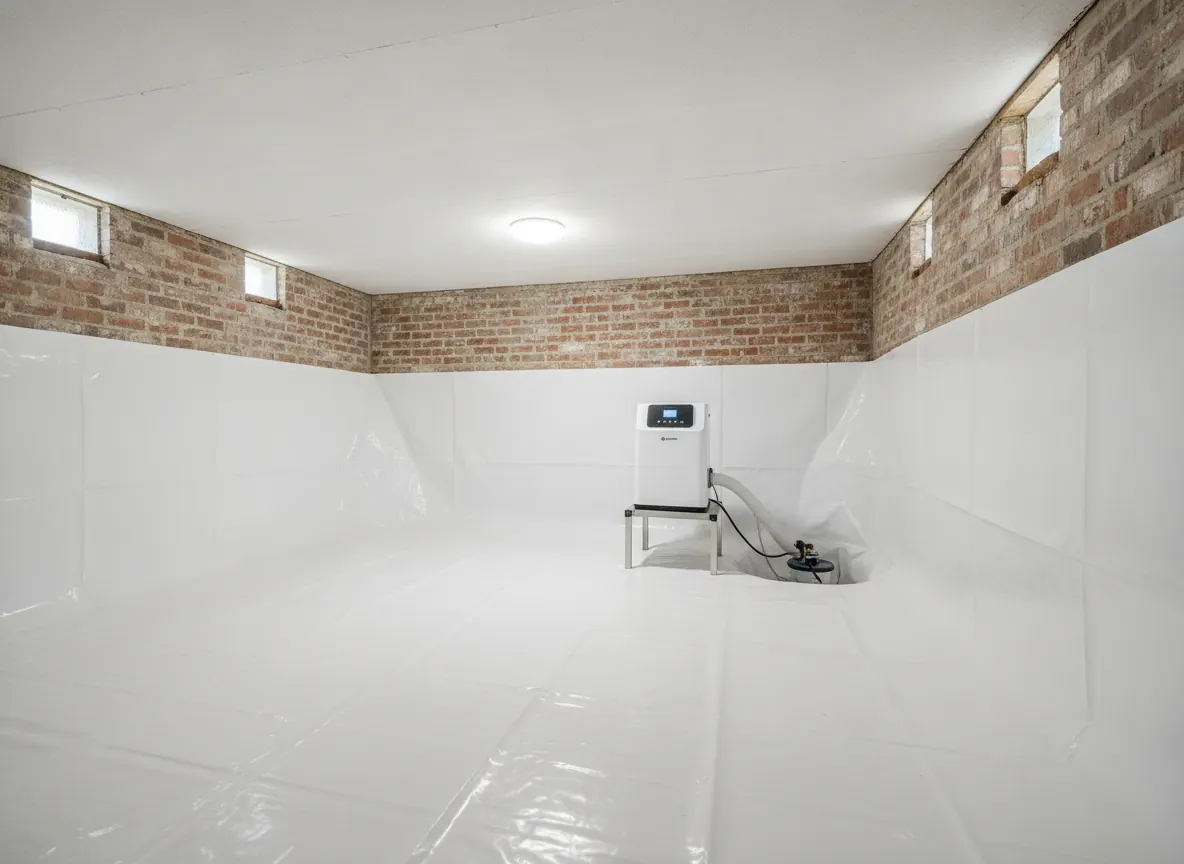
Ask about a damp crawl space in Shreveport, LA and two terms come up fast: vapor barrier and encapsulation. Both put plastic over the dirt under your house. The difference is how much of the crawl space gets sealed and whether anything dries the air afterward. That difference shows up in the price, too.
This guide explains what each one is, what each typically costs, and how to decide which fits a raised Louisiana home.
What a crawl space vapor barrier is
A vapor barrier is a sheet of polyethylene plastic laid over the exposed soil in the crawl space, with the seams overlapped and sometimes taped. It may run a short way up the foundation walls and around the piers. The goal is to slow ground moisture from rising into the crawl space air and into the wood framing above.
With a vapor barrier alone, the foundation vents usually stay open and the crawl space still trades air with the outdoors. Fixr lists an installed vapor barrier at $1,500–$4,000.
What full encapsulation adds
Encapsulation treats the crawl space as a closed space instead of an outdoor one. A typical scope includes:
- A heavier liner over the ground, with seams sealed and the liner run up the walls and around the piers.
- Foundation vents and other openings sealed.
- A dehumidifier, or in some designs conditioned air, to keep humidity down.
- Insulation on the walls in some cases.
- Drainage, such as a perimeter drain and sump, where water gets in.
This Old House puts encapsulation at $1,500–$15,000, averaging about $5,500, or roughly $3–$10 per square foot; Fixr lists $2,000–$15,000. A crawl space dehumidifier, installed, runs $800–$2,000 (This Old House).
Vapor barrier vs encapsulation at a glance
| Vapor barrier | Full encapsulation | |
|---|---|---|
| Ground cover | Plastic sheet, overlapped seams | Heavier liner, sealed seams |
| Walls and piers | Sometimes partway up | Liner runs up the walls and around piers |
| Vents | Usually stay open | Sealed |
| Humidity control | None | Dehumidifier or conditioned air |
| Water coming in | Not handled | Only if drainage is part of the job |
| Typical cost (national) | $1,500–$4,000 installed (Fixr) | $1,500–$15,000 (This Old House) · $2,000–$15,000 (Fixr) |
Typical national ranges from published 2025–2026 cost guides (Fixr, This Old House, Angi), not quotes. Your price depends on an on-site inspection.
Why the choice matters in Shreveport
Moisture is the reason this question comes up so often here. Shreveport averages about 51.4 inches of rain a year, with April the wettest month (about 5.2 inches) and August the driest and hottest (about 2.9 inches, with an average high near 94.9 °F). About 99 days a year reach 90 °F or above (NOAA 1991–2020 normals, Shreveport Regional Airport).
Several common soils around the city also drain very slowly. The Keithville series, a clayey upland soil mapped across south Caddo Parish, can be saturated within 2 to 3 feet of the surface in winter and early spring (USDA NRCS). Guyton soils, mapped in both Caddo and Bossier parishes, are poorly drained, and so are Wrightsville soils in Bossier Parish. Under a raised house, that can mean a crawl space that stays damp for long stretches.
Damp crawl spaces raise the risk of wood rot and termites. Formosan termites were first confirmed in a Shreveport-Bossier area building in 2016, in Haughton, LA; they are not known to be widespread here, and native subterranean termites are the everyday concern. Treatment is done by a pest control operator licensed by the Louisiana Department of Agriculture and Forestry (LDAF), not by the crawl space company.
When a vapor barrier may be enough
A vapor barrier on its own can make sense when:
- The crawl space stays dry after heavy rain, with no standing water or mud.
- The wood framing looks sound and dry, without dark staining or fungus.
- There is no musty smell in the house.
- The existing ground cover is torn or missing and simply needs replacing.
- Budget is tight and the main goal is to cut moisture rising from the soil.
When full encapsulation makes more sense
- A musty smell indoors that seems to come from below the floor.
- Condensation on ductwork, pipes or the underside of the floor in summer.
- Mold or fungus on joists, sills or beams.
- Wood that tests damp, or rot repairs that keep coming back.
- A vapor barrier already in place that has not solved the dampness.
Encapsulation does not replace structural repair. If piers have settled or joists have rotted, that work generally comes first, so the liner is not cut up later. See crawl space repair and pier and beam repair.
Stop the water before sealing the space. Neither a vapor barrier nor a liner fixes water that runs into the crawl space. Gutters, downspouts, grading and, where needed, a crawl space drain come first. This Old House lists a crawl space drainage system at $600–$1,800, and Fixr lists crawl space water drainage at $2,500–$10,000. See drainage and grading.
Questions to ask before you sign
- How thick is the liner, and are the seams taped or sealed?
- Will the liner run up the walls and around every pier?
- Which vents will be sealed, and how will the crawl space air be dried?
- If there is a dehumidifier: what size, where does it drain, and what upkeep does it need?
- How will a pest control operator or home inspector still see the wood and piers after the liner goes in?
- Is a permit needed for this work where you live? Ask the company, and confirm with your city or parish.
- What the warranty covers, whether it transfers to a buyer, and whether it is in writing.
A vapor barrier or encapsulation job with no structural repairs may fall under Louisiana's home improvement registration (projects of $7,500 to under $50,000 since August 1, 2024); confirm with the LSLBC which credential applies. The LSLBC also lists a separate mold remediation license for mold remediation projects of $7,500 or more. If structural repairs are part of the same job, foundation work over $7,500 generally calls for an LSLBC-licensed contractor, because structural work is excluded from home improvement. Look the company up at lslbc.louisiana.gov and confirm with the LSLBC which credential your job needs.
For scopes and typical prices, see crawl space encapsulation and the foundation repair cost guide for Shreveport, LA. Still deciding whether to do it at all? Read is crawl space encapsulation worth it.
Common questions
What is the difference between a vapor barrier and crawl space encapsulation?
A vapor barrier is a plastic sheet over the crawl space soil, usually with the vents left open. Encapsulation adds a heavier sealed liner up the walls and around piers, seals vents and openings, and controls humidity, usually with a dehumidifier. Encapsulation costs more and does more.
How much does a crawl space vapor barrier cost?
Fixr lists an installed vapor barrier at $1,500–$4,000. Full encapsulation runs $1,500–$15,000, averaging about $5,500 (This Old House), or $2,000–$15,000 (Fixr). These are national ranges; crawl space size, access and any drainage work change the price.
Is a vapor barrier enough in Louisiana?
It can be in a crawl space that stays dry, smells fine and has sound wood. If you see standing water, condensation, mold or musty air, a vapor barrier alone may not keep humidity down, and encapsulation with a dehumidifier may fit better. Fix drainage first either way.
Do I need a dehumidifier with encapsulation?
Many encapsulation designs include a way to dry the air once the vents are sealed, most often a dehumidifier, which This Old House lists at $800–$2,000 installed. Ask how the unit is sized, where it drains and what upkeep it needs, and get those details in the proposal.
Get quotes from local companies
Shreveport Foundation Services is a free quote service, not a foundation company. Describe what you are seeing once and independent crawl space companies serving Shreveport, LA, Bossier City and nearby towns can reply with quotes. Companies may pay to receive requests, and there is no obligation to hire anyone. Request free quotes or call (318) 633-1685.