
Is Crawl Space Encapsulation Worth It in Shreveport's Humidity?
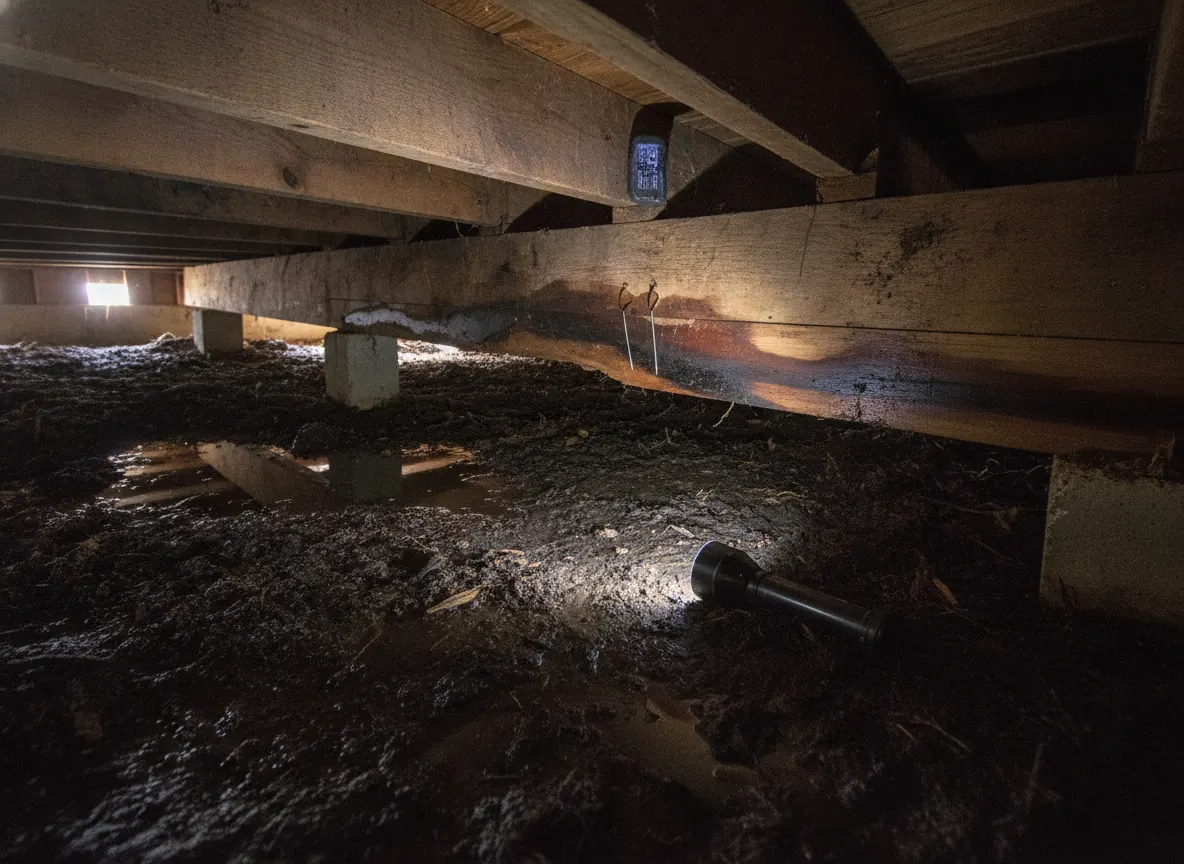
Crawl space encapsulation is one of the bigger checks the owner of a raised house can write, and a sales pitch can make it sound like the answer to everything under the floor. It is not. In Shreveport, LA, where crawl spaces can stay damp for long stretches, it is often worth it for the right house. For others, a vapor barrier, a gutter fix or a structural repair should come first.
Here is how to weigh it before you sign.
What encapsulation can and cannot do
A sealed liner over the ground and up the walls, sealed vents and a dehumidifier work together to keep the crawl space air drier. Drier air and wood can:
- Make conditions less favorable for wood rot and mold on joists, sills and beams.
- Cut down musty odors that rise into the house.
- Leave the crawl space cleaner and easier to work in.
- Reduce the damp conditions termites favor, though it does not replace termite treatment.
It does not:
- Stop water that flows in from outside. That needs drainage work.
- Repair piers, beams, joists or sills that have already settled or rotted.
- Level a floor.
- Replace inspection and treatment by a licensed pest control operator.
Signs your crawl space may benefit
- A musty smell in the house, worst in humid weather.
- Standing water, mud or wet soil in the crawl space after rain.
- Dark, stained or soft wood on sill plates or joists.
- Mold or fungus on the framing.
- Condensation on ducts, pipes or the underside of the floor.
- A torn, missing or patchy ground cover.
- Soft or sagging floors, which can point to wood damage worth checking.
The negatives of crawl space encapsulation
These are the trade-offs worth asking about.
- Upfront cost. This Old House puts encapsulation at $1,500–$15,000, averaging about $5,500. A basic installed vapor barrier runs $1,500–$4,000 (Fixr).
- Ongoing costs. A dehumidifier ($800–$2,000 installed, This Old House) runs on electricity and needs its filter and drain checked. If it stops working, humidity can climb again.
- It can hide problems. A liner covers the soil and part of the walls. Ask how you, a home inspector or a pest control operator will see the piers, sills and wood after it goes in.
- A partial job can backfire. Sealing vents without drying the air, or lining a crawl space that still takes on water, can hold moisture in instead of removing it.
- Order matters. If structural or drainage work is needed later, parts of the liner may have to be cut and patched.
- Oversold claims. Be wary of specific promises about health, allergies or energy savings. Ask for the basis in writing.
The cost next to the repairs moisture can lead to
One way to judge the price is to set it beside the wood repairs that a wet crawl space can contribute to. These are typical national ranges:
| Item | Typical range | Source |
|---|---|---|
| Crawl space encapsulation | $1,500–$15,000 (avg ≈ $5,500; $3–$10 per sq ft) · $2,000–$15,000 | This Old House, Mar 2026 · Fixr |
| Vapor barrier, installed | $1,500–$4,000 | Fixr |
| Crawl space dehumidifier, installed | $800–$2,000 | This Old House |
| Crawl space drainage system | $600–$1,800 · $2,500–$10,000 | This Old House · Fixr |
| Wood rot repair in a crawl space | $750–$5,000 | Fixr |
| Floor joist repair | $100–$300 per joist | Fixr |
| Sagging floor repair | $1,000–$5,000 | Fixr |
| Support beam replacement | $1,500–$5,000 per beam | Fixr |
Typical national ranges from published 2025–2026 cost guides (Fixr, This Old House, Angi), not quotes. Your price depends on an on-site inspection.
Encapsulation is no promise that you will never need those repairs. It addresses one of the main conditions behind them: wood that stays damp.
Why Shreveport conditions tilt the math
Three local factors push toward taking crawl space moisture seriously:
- Rain and heat. Shreveport averages about 51.4 inches of rain a year, with April the wettest month (about 5.2 inches) and August the driest and hottest (about 2.9 inches, with an average high near 94.9 °F). About 99 days a year reach 90 °F or above (NOAA 1991–2020 normals, Shreveport Regional Airport).
- Clay and slow-draining soils. Much of Caddo and Bossier parishes is mapped in clay soils with high to very high shrink-swell potential (USDA NRCS soil data): roughly 43% of Caddo and 55% of Bossier by area, including Red River clays like Moreland and Buxin and upland soils like Eastwood and Keithville. Some of these soils, such as Keithville, are also very slowly permeable and can hold perched water within 2 to 3 feet of the surface in winter and early spring (USDA NRCS). Check your own lot on Web Soil Survey.
- Older houses. About 65% of Shreveport homes were built before 1980 (median year 1973), and about 78% in Minden, LA (ACS 2020–2024). Many older homes in districts like Highland, Fairfield and South Highlands sit on piers over a crawl space.
None of that means every crawl space here needs encapsulating. It means a damp crawl space is common enough to be worth checking yours.
When it is likely worth it, and when it may not be
Often worth it
- The crawl space stays damp or smells musty even though water is not running in.
- Wood has rotted before and has been repaired, and you want to protect that work.
- Drainage is already handled and any structural repairs are done.
- You plan to stay in the house long enough to keep up with a dehumidifier.
May not be worth it yet
- Water still runs in after rain. Fix gutters, grading or drainage first.
- Piers, sills or joists need repair. Do the structural work first.
- The crawl space is already dry with sound wood. A vapor barrier may be enough.
- No one will maintain the dehumidifier.
Structure and water first, then seal. If floors sag or a quote mentions settled piers or rotted wood, get that sorted before encapsulation so the liner does not have to be cut later. For a large pier or leveling job, or quotes that disagree, consider an independent LAPELS-licensed structural engineer ($300–$1,000, This Old House). See crawl space repair and drainage and grading.
Before you sign: license, cancel rights and warranty
Moisture work without structural repairs may fall under Louisiana's home improvement registration (projects of $7,500 to under $50,000 since August 1, 2024); confirm with the LSLBC which credential applies. Mold remediation of $7,500 or more has its own LSLBC license. If the same job includes structural repairs, foundation work over $7,500 generally calls for an LSLBC-licensed contractor, since structural work is excluded from home improvement. Look the company up at lslbc.louisiana.gov, ask for the license number and proof of liability insurance, and confirm with the LSLBC if you are unsure.
Louisiana's home solicitation law (R.S. 9:3538) gives a 3-business-day right to cancel many in-home sales of $25 or more, but it may not apply when you contacted the company yourself or to emergency repairs already under way. Ask whether a cancel right applies and get it in writing.
On the warranty, ask what it covers (the liner, the dehumidifier, moisture levels or only workmanship), whether it transfers to a buyer, and get it in writing. Then compare at least two written scopes. For details on scope and price, see crawl space encapsulation, the foundation repair cost guide for Shreveport, LA and encapsulation vs vapor barrier.
Common questions
Is crawl space encapsulation worth it in Louisiana?
Often, for a crawl space that stays damp, smells musty or has a history of wood rot, as long as drainage and structural repairs are handled first. For a dry crawl space with sound wood, a vapor barrier may be enough. Get an inspection and compare written scopes before deciding.
What are the negatives of crawl space encapsulation?
The main ones are upfront cost ($1,500–$15,000 per This Old House), a dehumidifier that uses power and needs upkeep, a liner that can make piers and wood harder to inspect, and the risk that a partial job holds moisture in. It also does not fix water entry or structural damage.
Does crawl space encapsulation stop termites?
No. It can reduce the damp conditions termites favor, but it does not treat or prevent them. Termite inspection and treatment in Louisiana is done by a pest control operator licensed by the Louisiana Department of Agriculture and Forestry. Ask how they will inspect after the liner is installed.
How much does crawl space encapsulation cost in Shreveport?
No reliable Shreveport-specific price is published. National guides list $1,500–$15,000, averaging about $5,500 (This Old House), or $2,000–$15,000 (Fixr). Crawl space size, access, drainage and a dehumidifier drive the total, so compare written quotes from local companies.
Get quotes from local companies
Shreveport Foundation Services is a free quote service, not a foundation company. Describe what you are seeing once and independent crawl space companies serving Shreveport, LA, Bossier City and nearby towns can reply with quotes. Companies may pay to receive requests, and there is no obligation to hire anyone. Request free quotes or call (318) 633-1685.