
Why Are My Floors Sagging? Rotted Sills, Joists and Settled Piers
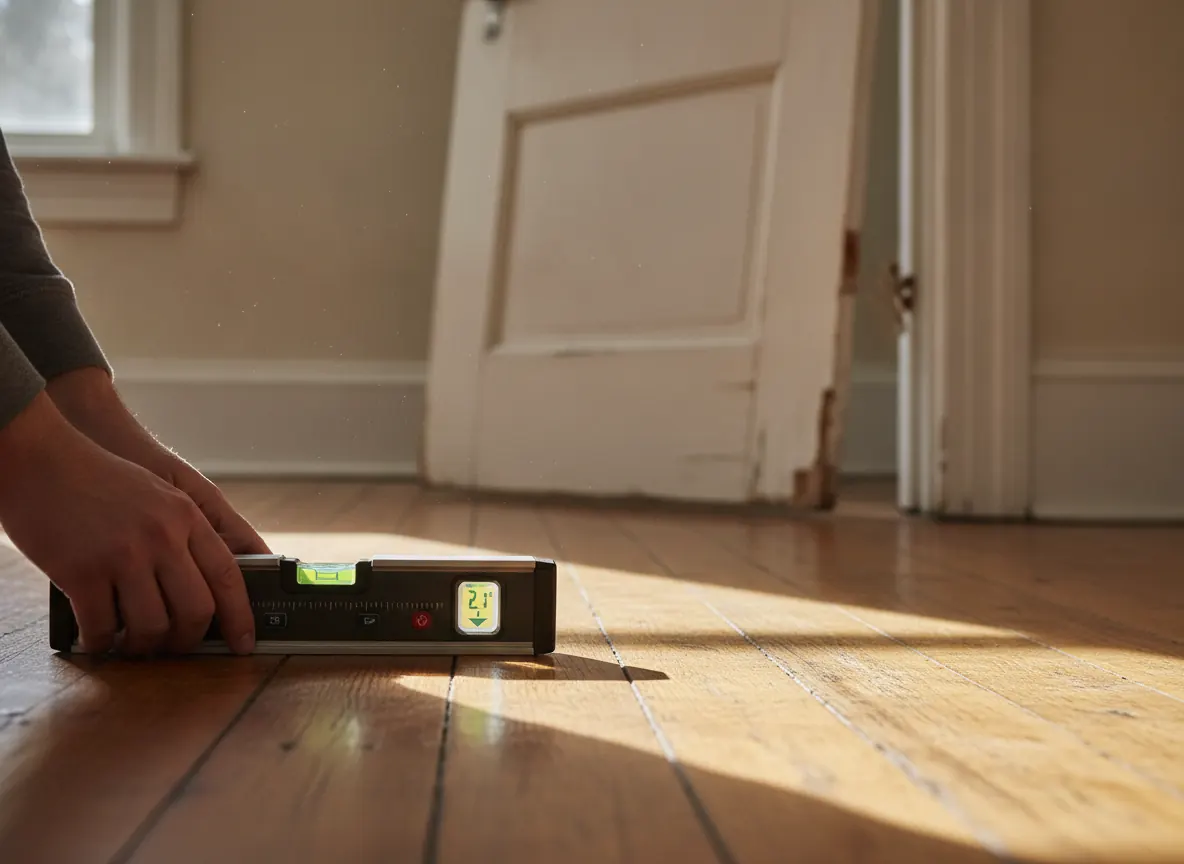
A dip in the hallway, a bounce by the bathroom door, a marble that rolls toward an outside wall. In a raised house in Shreveport, LA, a sagging floor usually means something under it has changed: a pier has settled, wood has rotted, or a span has been carrying more than it can for years. The fix depends on which, so it helps to know the usual causes before companies come out.
This article is about pier-and-beam homes over a crawl space. If your house is on a slab, see slab foundation repair instead.
How a raised floor is held up
In a pier-and-beam house, piers on footings carry wood beams. Floor joists run across the beams and rest at the outside walls on a sill plate, a board laid along the top of the perimeter foundation. The subfloor and finished floor sit on the joists. A problem at any level, from the soil under a footing to a single joist, can show up as a sag.
Common causes of sagging floors
1. Settled or shifted piers
Each pier sits on its own footing. On clay that swells when wet and shrinks when dry, one pier can drop or lift while the others stay put. Much of Caddo and Bossier parishes is mapped in clay soils with high to very high shrink-swell potential (USDA NRCS soil data): roughly 43% of Caddo and 55% of Bossier by area, including Red River clays like Moreland and Buxin and upland soils like Eastwood and Keithville. A low spot centered over one support often points here.
2. Rotted sill plates and rim joists
The sill plate and the rim joist along the outside wall sit closest to the weather and the soil. Leaks, splashback from missing gutters and a damp crawl space can rot them. A floor that slopes toward an outside wall can be a sign.
3. Rotted, cracked or cut joists
Joists can rot under leaking bathrooms and kitchens, crack under heavy loads, or be weakened where past plumbing or duct work cut through them. A soft or springy spot in one room often traces back to a few joists.
4. Long spans and too few supports
Some older homes have beams that span long distances between piers, or piers spaced far apart. Over decades a beam can sag between supports, often as a gentle dip mid-room.
5. Termite damage
Damp crawl spaces raise the risk of rot and termites. Treatment is done by a pest control operator licensed by the Louisiana Department of Agriculture and Forestry (LDAF), not the foundation company, and it should happen before or alongside structural repair.
6. Moisture in the crawl space
Water and humidity sit behind several of the causes above. Standing water after rain, wet soil, a torn or missing vapor barrier and a musty smell are all worth noting. See crawl space encapsulation for the moisture side.
Typical repair costs by cause
| Cause | Typical fix | Typical range (national) |
|---|---|---|
| Settled piers | Re-shim, add or replace piers | $1,000–$3,000 per underpinning pier (Fixr, This Old House); pier-and-beam shimming and pier replacement not reliably published |
| Rotted sill plate | Replace the rotted section | Not reliably published; get written quotes |
| Damaged joists | Sister or replace joists | $100–$300 per joist (Fixr) |
| Sagging beam | Replace the beam or add support | $1,500–$5,000 per beam (Fixr) |
| Rot in the crawl space | Remove and replace rotted wood | $750–$5,000 (Fixr) |
| Sagging floor, overall | A combination of the above | $1,000–$5,000 (Fixr) |
| Larger pier-and-beam repair | Several of the above across the house | $2,000–$15,000 (Fixr) |
Typical national ranges from published 2025–2026 cost guides (Fixr, This Old House, Angi), not quotes. Your price depends on an on-site inspection.
For more on how leveling jobs are priced, read pier and beam leveling cost in Louisiana or try the calculator on the foundation repair cost guide for Shreveport, LA.
What you can check yourself
- Note where the floor dips or bounces and mark it on a simple sketch of the house.
- Use a level, or a marble on a hard floor, to see which way the floor runs.
- Check doors and windows near the low spot for sticking or uneven gaps.
- Look for gaps between baseboards and the floor, or cracks at drywall corners.
- From the crawl space access opening, look with a flashlight for standing water, torn plastic and dark, stained wood. You do not need to crawl in.
- Take dated photos so you can tell later whether anything is changing.
Shreveport-area factors that can play a part
Age is the first one. About 65% of Shreveport homes were built before 1980, with a median year built of 1973, and in Minden, LA the share is about 78% (ACS 2020–2024). Many older homes in early 20th-century districts like Highland, Fairfield and South Highlands sit on piers over a crawl space. Wood that has spent decades over damp ground, and piers that have ridden out decades of wet springs and dry summers, are where sags can start.
Weather is the second. Shreveport averages about 51.4 inches of rain a year, with April the wettest month (about 5.2 inches) and August the driest and hottest (about 2.9 inches, with an average high near 94.9 °F). About 99 days a year reach 90 °F or above (NOAA 1991–2020 normals, Shreveport Regional Airport). Caddo Parish peaked with 88.9% of the parish in D3 "extreme" drought on September 19, 2023, and Bossier, Webster and De Soto parishes also reached D3 in 2022–2023 (U.S. Drought Monitor). Drying and rewetting of clay can contribute to pier movement.
How companies typically fix a sagging floor
Inspect and measure
Floor elevation readings and a crawl space inspection show which supports and which wood are involved.
Deal with water
Leaks, gutters, grading and crawl space moisture are addressed so new wood does not sit in the same conditions.
Treat for pests
If termites are found, an LDAF-licensed pest control operator treats before or alongside the repair.
Repair the wood
Rotted sills are replaced, weak joists are sistered or replaced, and failed beams are replaced or given more support.
Adjust the supports
Piers are shimmed, added or replaced, the floor is brought back toward level in stages, and readings are taken again.
See crawl space repair for the wood side of the job and pier and beam repair for piers and leveling.
Get an independent opinion on a big job. For a large pier or leveling job, quotes that disagree, or a home you are buying or selling, consider an assessment by an independent structural engineer licensed by LAPELS (the Louisiana Professional Engineering and Land Surveying Board). This Old House puts a structural engineer inspection at $300–$1,000, averaging about $600. The engineer should be independent of the company selling the repair. See foundation inspections.
Questions to ask before you hire
- What do you think is causing the sag, and how did you check?
- Which piers, beams, joists and sills will you repair or replace, by location?
- Will you take elevation readings before and after, and give me copies?
- What is the plan for moisture and drainage?
- What is your LSLBC license number, and can I see proof of liability insurance?
- Who pulls the permit?
- What does the warranty cover, does it transfer to a buyer, and is it in writing?
Louisiana's contractor board (LSLBC) changed its thresholds on August 1, 2024. Home improvement registration now covers most projects of $7,500 to under $50,000, but structural work such as foundations, footings and floor slabs is excluded from "home improvement", so foundation repair over $7,500 generally calls for an LSLBC-licensed contractor. Look the company up at lslbc.louisiana.gov and ask for the license number, proof of liability insurance and the permit. If you are unsure which credential your job needs, confirm with the LSLBC.
Structural repairs generally need a permit from your city or parish; your contractor should pull it. In Shreveport and the rest of Caddo Parish except Greenwood, that is the City of Shreveport's Permits and Inspections office. Bossier City has its own office, unincorporated Bossier Parish and Benton use Code Inspections Plus, and Haughton, Minden and Stonewall have town offices.
Common questions
What causes sagging floors in a pier and beam house?
The usual causes are piers that have settled or shifted, rotted sill plates or rim joists, damaged or cut joists, beams spanning long distances between supports, termite damage and a damp crawl space. Several often show up together, so ask for a crawl space inspection and floor elevation readings before choosing a fix.
How much does sagging floor repair cost?
Fixr lists sagging floor repair at $1,000–$5,000 nationally, with floor joist repair at $100–$300 per joist and support beam replacement at $1,500–$5,000 per beam. Underpinning piers are listed at $1,000–$3,000 each (Fixr, This Old House); pier-and-beam pier work is not reliably priced, so get written quotes. Larger jobs can reach the $2,000–$15,000 pier-and-beam repair range.
Can a sagging floor be fixed from the crawl space?
Often, yes. In most pier-and-beam homes, companies work from below to repair or replace wood and to shim, add or replace piers, so the floor surface may not need to come up. Doors, trim or drywall may need adjustment after the floor moves, so ask whether that is in the quote.
Does homeowners insurance cover sagging floors?
Often not. Standard homeowners policies commonly exclude settling, earth movement and gradual damage such as rot. A sudden event, like a burst pipe, may be treated differently. Read your policy and ask your agent before assuming either way.
Get quotes from local companies
Shreveport Foundation Services is a free quote service, not a foundation company. Describe what you are seeing once and independent foundation and crawl space companies serving Shreveport, LA, Bossier City and nearby towns can reply with quotes. Companies may pay to receive requests, and there is no obligation to hire anyone. Request free quotes or call (318) 633-1685.