
Structural Engineer or Free Inspection? Getting a Foundation Checked in Shreveport
Before you pay for piers or leveling in Shreveport, LA, someone has to figure out what is moving and why. You can get that from a free inspection by a repair company, from an independent structural engineer, or both. Here is how the two differ, when each one makes sense, and how to use them together.
Shreveport Foundation Services is a free quote service, not a foundation company. Independent local companies, which may pay to receive requests, reply to homeowners with quotes, and the company you choose does the work. The companies that reply are repair companies, not engineers, so this post explains when to bring in an engineer of your own.
What is the difference?
A free inspection comes from the company that hopes to sell you the repair. A good one is useful: someone looks at the house, takes floor readings and explains a proposal. But its job is to price the work that company does. An independent Louisiana-licensed engineer works for you, not the repair company. You pay for the visit and get a written opinion on what is happening and what, if anything, needs fixing.
| Question | Free contractor inspection | Independent structural engineer |
|---|---|---|
| Who pays | Usually no charge | You; about $300–$1,000 (avg ≈ $600, This Old House) |
| Who they work for | The company selling the repair | You |
| What you leave with | A proposal and a price | A written report on cause and recommended repair or monitoring |
| License to check | LSLBC contractor license | Professional engineer license (LAPELS) |
| Best for | Pricing a fix you already understand | Large jobs, conflicting quotes, home sales |
When a free inspection is enough
Many jobs do not need an engineer. If the problem is clear and contained, two or three free inspections and written quotes are often all you need. Examples include lifting a sunken driveway or patio slab (see concrete leveling and mudjacking), a crawl space vapor barrier with no structural damage, or a single hairline crack you have watched for months without change. Compare the scopes side by side and ask each company to explain anything that differs.
When to hire a structural engineer first
- Large pier or leveling jobs. A proposal for eight piers at $1,000–$3,000 each (Fixr, This Old House) comes to $8,000–$24,000. An engineer's fee is a small share of that.
- Quotes that disagree. One company wants piers, another wants drainage work, a third says shim and watch. An engineer can tell you which diagnosis fits.
- Buying or selling a home. Buyers and sellers both benefit from a neutral written report.
- Several signs at once. Brick cracks, sticking doors and sloping or bouncy floors together suggest real movement.
- After a repair. Some owners have an engineer check the finished work, especially before a sale.
What an engineer's assessment usually covers
History
When you noticed the problem, whether it is changing, past repairs and the age of the house.
Floor elevations
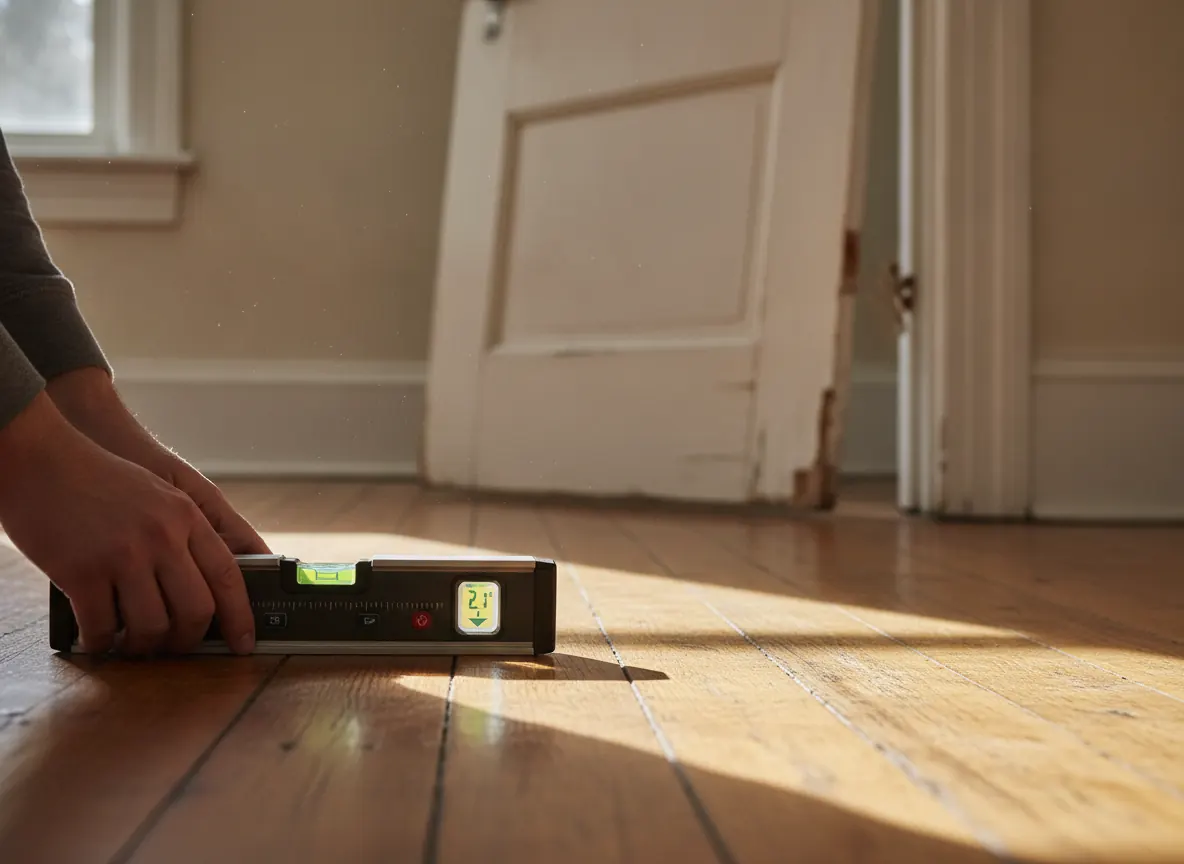
Readings room by room with a digital or laser level, mapped to show high and low spots.
The structure
Crack patterns, doors and windows, the slab edge or the crawl space, piers, beams and sills.
Water and lot
Gutters, downspouts, grading and where water goes after rain.
Written report
Likely cause, whether the movement is structural, and what repair or monitoring makes sense.
The report may recommend a geotechnical soil report or, under a slab, a plumbing test; ask what each would add to the fee. Ask, too, whether the written report is included in the engineer's fee or billed separately.
Why it matters in Shreveport and Bossier City
Much of Caddo and Bossier parishes is mapped in clay soils with high to very high shrink-swell potential (USDA NRCS soil data): roughly 43% of Caddo and 55% of Bossier by area, including Red River clays like Moreland and Buxin and upland soils like Eastwood and Keithville. Check your own lot on Web Soil Survey. Clay like that can contribute to movement in both slab and pier-and-beam homes, and soils vary block by block, so a neutral look at your house is worth more than a general rule. See how Red River clay can move Shreveport foundations.
The housing mix matters too. Shreveport's median home was built in 1973, and about 65% of homes were built before 1980 (ACS 2020–2024). Many older homes in districts such as Highland, Fairfield and South Highlands sit on piers over a crawl space, where the question is often which piers moved and whether the framing is sound. Newer homes, common in Haughton, LA (45% built 2000 or later) and parts of Bossier City, LA, are more often slabs, where the question is edge lift or settlement. An engineer can help sort out whether a house needs pier-and-beam repair, slab foundation repair or simply monitoring.
Keep the engineer independent. Ask whether the engineer has business ties to repair companies or takes referral fees from them. An engineer recommended by the company selling the repair may still be good, but you should know about the link. The point of the report is a second opinion that does not depend on the sale.
How to vet an engineer
- Confirm a Louisiana professional engineer license with LAPELS (lapels.com). Architects are licensed by a separate board.
- Ask how often they assess residential foundations, and whether the report includes an elevation survey.
- Ask what the fee covers: the visit, a written report, and any later review of contractor proposals.
- Ask whether they will come back to inspect the finished repair, and at what cost.
A note on home sales
Under Louisiana's pest control rules, a wood destroying insect report (WDIR) is generally issued for sales and refinancing by licensed termite operators and does not promise any repairs. It is a termite report, not a foundation assessment, so it does not take the place of an engineer if the house shows signs of movement.
Putting it together
A sensible order for a bigger job: get one or two free inspections to see what companies propose, bring in an independent engineer if the proposals are large or disagree, then get final written quotes that follow the engineer's report. Louisiana's contractor board (LSLBC) changed its thresholds on August 1, 2024. Home improvement registration now covers most projects of $7,500 to under $50,000, but structural work such as foundations, footings and floor slabs is excluded from 'home improvement', so foundation repair over $7,500 generally calls for an LSLBC-licensed contractor. Look the company up at lslbc.louisiana.gov and ask for the license number, proof of liability insurance and the permit. Ask what the warranty covers, whether it transfers to a buyer, and get it in writing.
The Shreveport foundation repair cost guide shows typical national ranges and has a calculator that can add an engineer's visit. Foundation inspections covers the engineer's visit in more detail. When you are ready, request free quotes from independent companies serving the area.
Frequently asked questions
How much does a structural engineer cost in Shreveport?
No reliable Shreveport-specific price was found. This Old House lists a structural engineer inspection at about $300–$1,000 nationally, with an average near $600. Ask each engineer what the fee covers, including the visit, the written report and any later review of repair proposals.
Are free foundation inspections worth it?
Yes, for pricing a repair you already understand. A free inspection shows what a company proposes and what it would charge. Keep in mind that it comes from the company selling the repair. For large pier or leveling jobs, conflicting quotes or a home sale, an independent engineer's report is worth adding.
Does a termite report check the foundation?
No. A Louisiana wood destroying insect report (WDIR) is a termite report generally issued for sales and refinancing by licensed termite operators. It does not assess foundation movement and does not promise any repairs. If a house shows cracks, sticking doors or sloping floors, a structural engineer is the right professional.
Can I use an engineer the repair company recommends?
You can, but ask about the relationship. An engineer with business ties to the company or who takes referral fees from it is less independent. Choosing your own LAPELS-licensed engineer keeps the second opinion separate from the sale, which is the main reason to hire one.